In this dynamic world, change is rampaging across sectors, regions and businesses globally, making the ability to stay up to date vital to not only stay in the race, but to lead the race. Keeping up with the pace of change is not easy and there are factors that keep organisations from being agile and adaptive.
In our recent report, 'The race for agility', we draw on two key pieces of research conducted by Harvey Nash Group - the 2020 CIO survey and the 2021 tech and talent study - bringing you the blind spots and factors that make agility become reality to organisations.
The collapse of the five-year plan
Although agility does not come easily to many, the value it brings to organisations is significant and the results show that the most adaptable organisations are more likely to have an accurate long-term view of the future than the less adaptable ones.
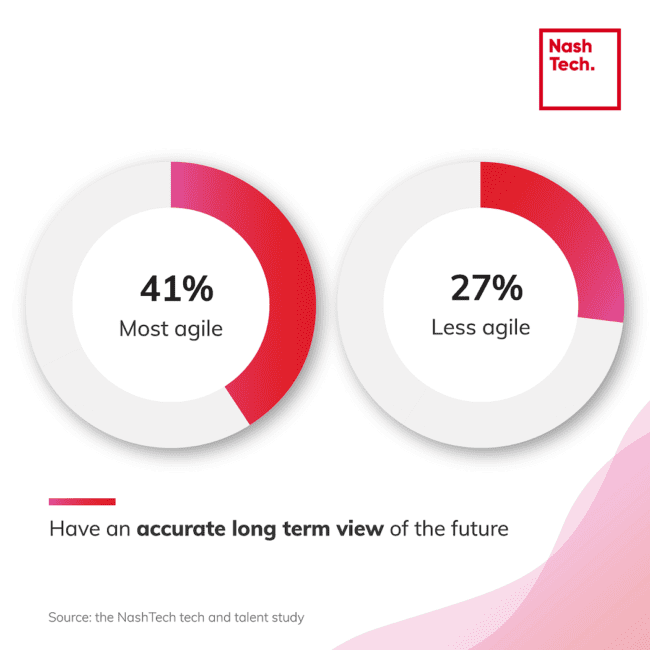
This is not because they have a better 'telescope', but because when they put their eye to view finder they are likely to be comfortable seeing less detail. It seems adaptable organisations are not straining their eyes looking for answers to that 'five-year plan'. So, with the collapse of the five-year plan, it seems like this is the perfect time for agility to rise.
But, how?
How do organisations become agile?
To answer this question, we asked thousands of IT leaders to share their insights and there are three main factors that lead to the success in becoming agile for organisations:
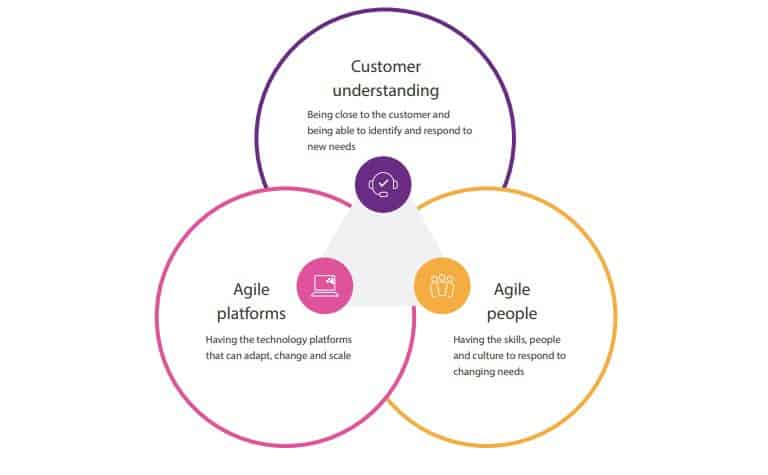
1. Customer understanding
No matter what business you are in, how big your company is or what you do, the ultimate goal is know and understand your customer. Being close to your customer, and being able to identify and react to their new needs, is extremely important.
2. Agile platforms
Technology is one of the most important pillars in the world of agile. It is essential for any company to have technology platforms that can adapt, change and scale. Based on our research, there are five key areas in which organisations are improving their agility:
- Artificial intelligence (AI)
- Robotic process automation (RPA)
- Big data
- Software as a service (SaaS)
- Internet of things (IoT)
3. Agile people
While agility is often framed as a technology 'thing', there are other factors that are just as important: people and culture. It is vital that organisations have the skills, culture and appropriate human resources to respond to the changing needs.
Continual change in small increments across the whole organisation seems to be the most common route to business growth and evolution. This can begin with something as simple as shared ideas of what can be improved or new methods and technology that can be embraced. This is where working with a partner like NashTech can help accelerate your journey as we will collaborate closely with you, turning the mindset of 'agile by default' into reality.
If you're interested in starting your agile journey and are looking for a trusted partner to stand by you, don't hesitate to contact us at info@nashtechglobal.com!