









ArticleReading time:4 min
The hidden cost of review time in lending operations
As lending markets become increasingly competitive, operational efficiency is becoming as important as risk management.
INSIGHTS REPORT
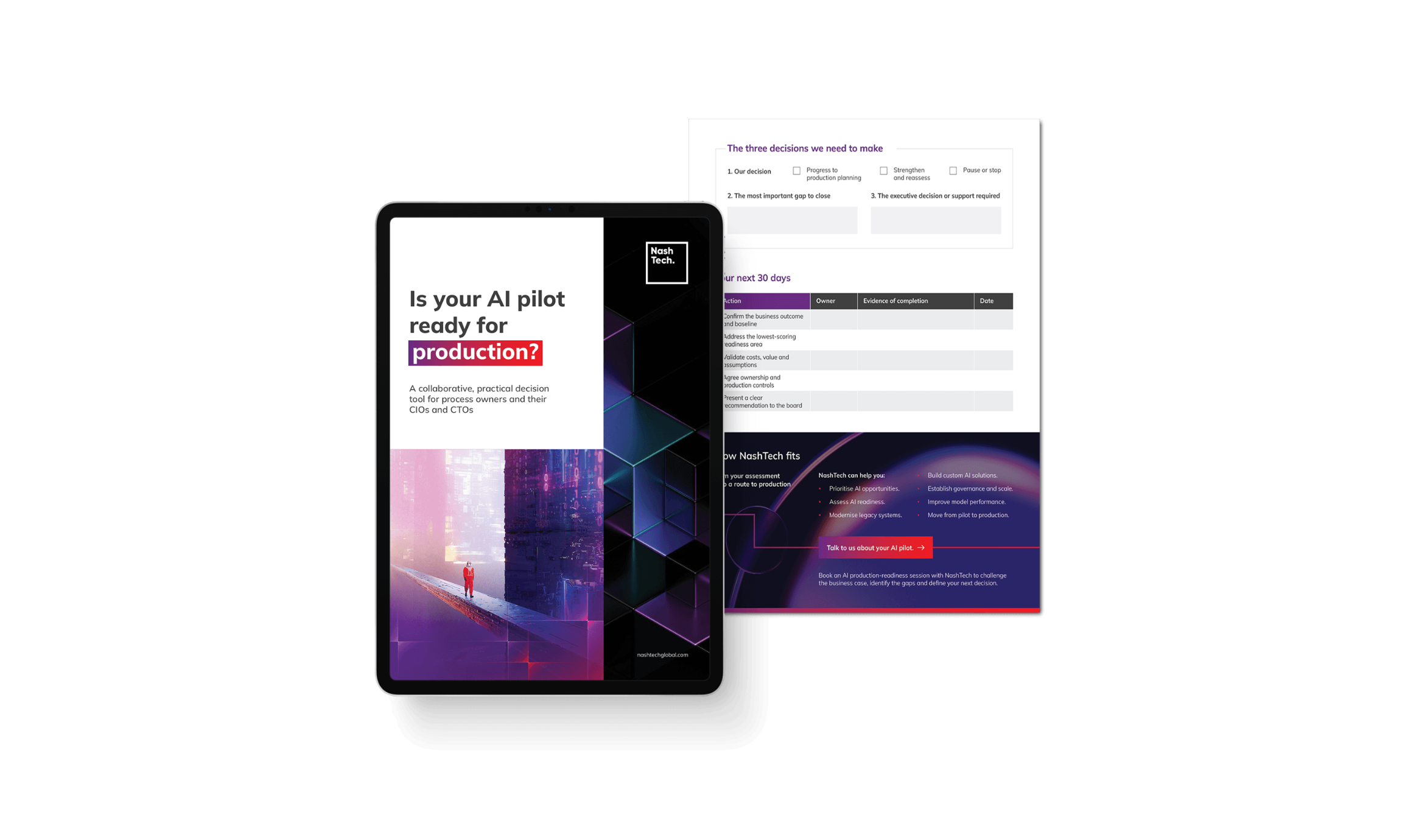
Download our executive report and discover how leading organisations are moving from AI experimentation to enterprise-wide impact.
COMMON BARRIERS
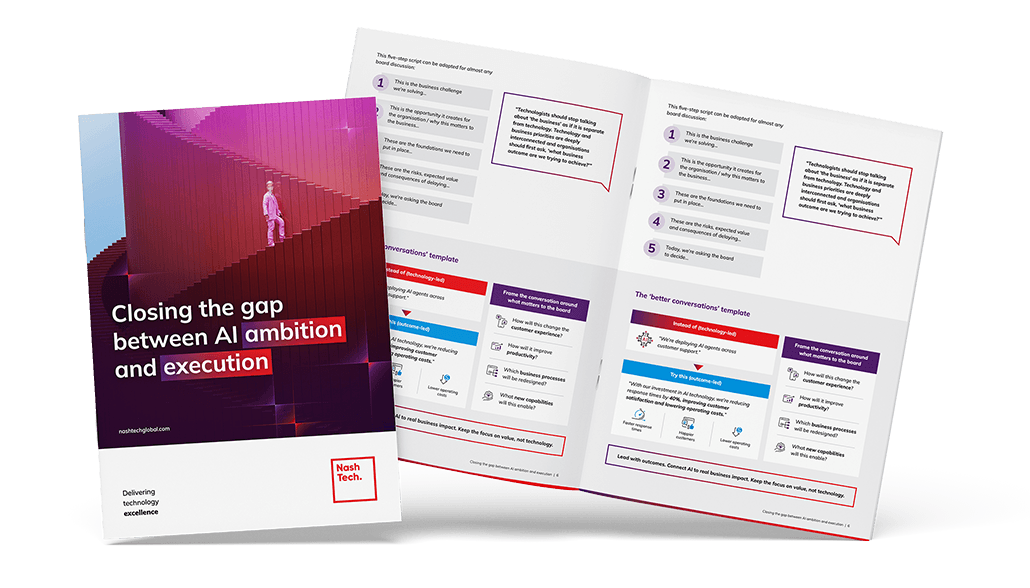
Many organisations know they need to do more with AI. Technology leaders feel the pressure to get ‘something’ working to keep the business happy, but deep down, they know this isn't as easy as ‘just do AI’. It's about communicating the work behind AI, but how?
Change the conversation to “what business outcomes are we trying to achieve and what needs to change to make it happen?” Our guide helps translate AI ambition into a practical business case, with language the Board can buy into, and with clear ownership and direction.
.jpeg?width=1219&height=1000&name=Whats%20inside%20(2).jpeg)
COMMON BARRIERS
The CIO knows the reality: weak data foundations, poor integrations and limited capacity mean a handful of AI pilots are unlikely to deliver value. The most effective CIOs do not simply say yes or no. They acknowledge the ambition behind the request, then guide the conversation towards outcomes: what the business wants to achieve, who will benefit, what needs to change and how success will be measured.
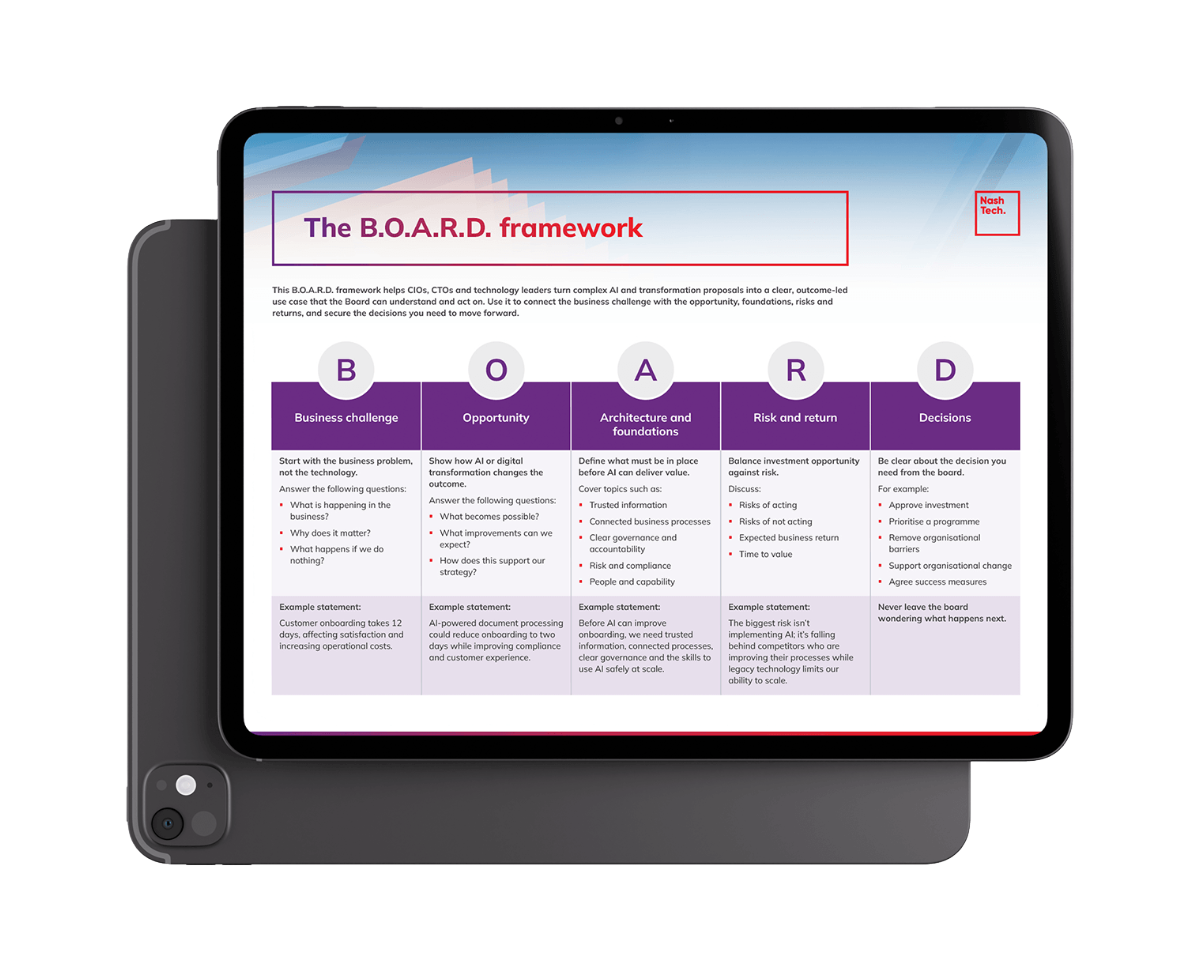
Being the leader who changes the conversation: A framework for execution. The B.O.A.R.D framework: Translate technical complexity into board-level language, helping technology leaders communicate AI initiatives in business terms.
COMMON BARRIERS
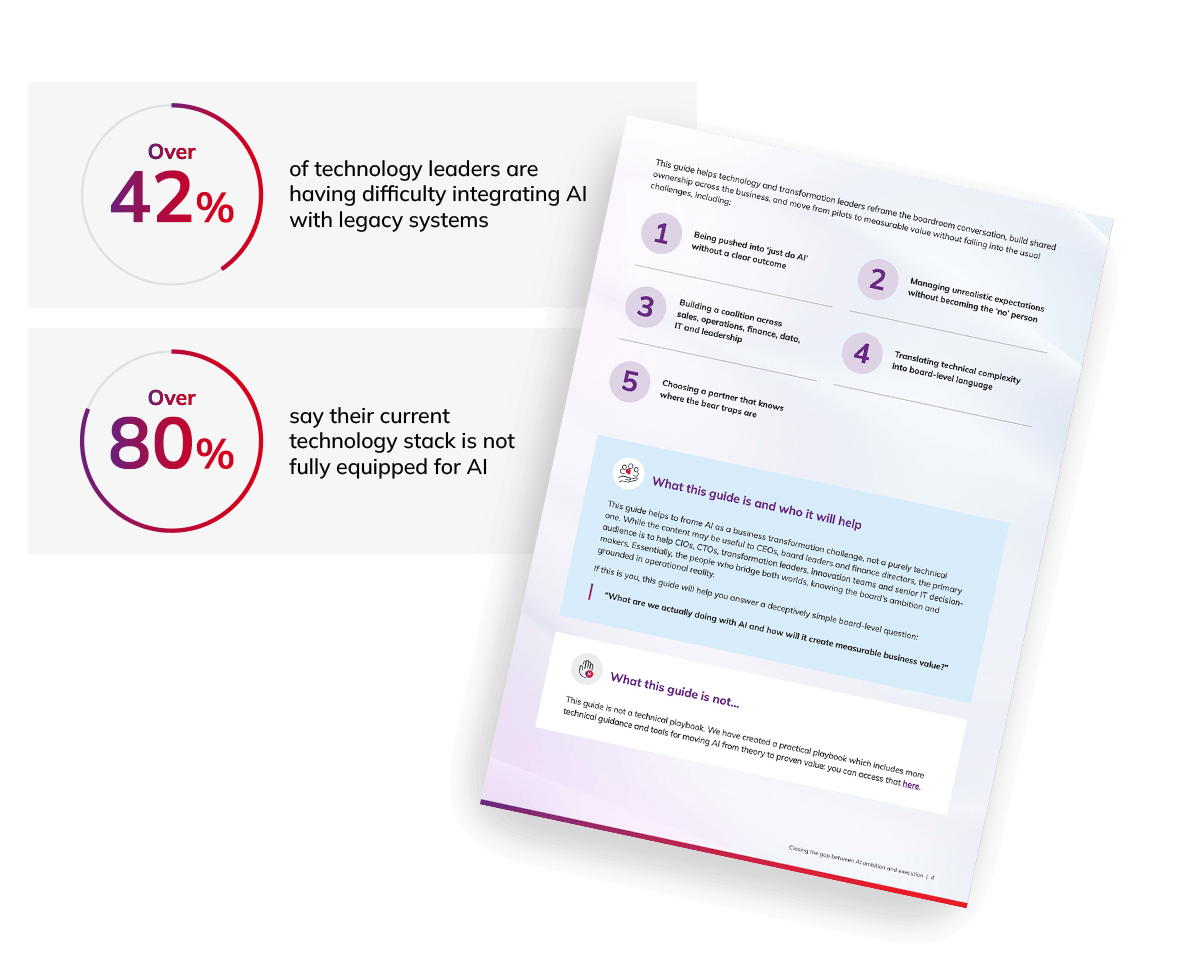
No matter how advanced, AI built on inconsistent, incomplete or poorly governed data will not produce dependable results at scale. When NashTech asked 1,000 technology leaders, only 20% selected the data layer as a priority for investment. Prioritising the model layer, even though weak data foundations and training challenges account for roughly 70% of AI failures.

COMMON BARRIERS
Integration is one of the biggest barriers to moving AI from pilot to production. The challenge is not just that technology estates are old. It is that they are complex, with data silos, fragmented processes, and immature integration practices.
For AI to create value at scale, data needs to be accessible across the business to the people and systems that need it, while remaining protected by the right governance and controls. Download the flagship report on closing the gap between AI ambition and execution for more practical guidance on creating the conditions for measurable, scalable value.
COMMON BARRIERS
CIOs and technology leaders cannot carry AI transformation alone. Sales, operations, finance, data, compliance, and leadership all need clear roles for AI to work at scale.
Don't let AI pilots stall before production. Our AI pilot-to-production assessment tool helps business and technology leaders identify readiness gaps, align stakeholders and determine the right next step for every AI initiative.

COMMON BARRIERS
Teams are being asked to move faster and support more AI-enabled use cases, often without the specialist skills, infrastructure or operating model needed to keep pace.
As AI starts supporting routine decisions and workflows, teams' focus will shift towards human-centric areas. In many businesses, it is already happening informally, without the supporting structures, training or governance to make it sustainable. Employees need the confidence and skills to use AI responsibly, and procurement teams need to know how to assess the capabilities of external partners.
Assess whether your AI pilot is truly ready to scale. Download our AI pilot-to-production assessment tool to identify readiness gaps, align stakeholders and make confident decisions about moving from pilot to production.

Ready to move beyond AI pilots?
Discover the full potential of AI with an AI implementation partner that combines strategy, engineering and delivery excellence to drive real business outcomes.
HOW NASHTECH HELPS
We don’t just implement technology, we solve business problems. Our teams combine deep technical expertise with a practical, human approach to deliver solutions that work in the real world, not just on paper.
We’re your partner for long-term transformation - many of our client relationships span years because we focus on delivering lasting value, not short-term consulting engagements. And with more than 26 years of delivering complex technology solutions, we understand how innovation works in real organisations - not just in theory. You get honest advice, practical solutions, a team that cares and a partner that is completely invested in your success.

68
Client net promoter score
5
Global delivery centres
1.8k
Engineering experts
26+ years
Engineering excellence
51
Employee net promoter score
Insights
As lending markets become increasingly competitive, operational efficiency is becoming as important as risk management.
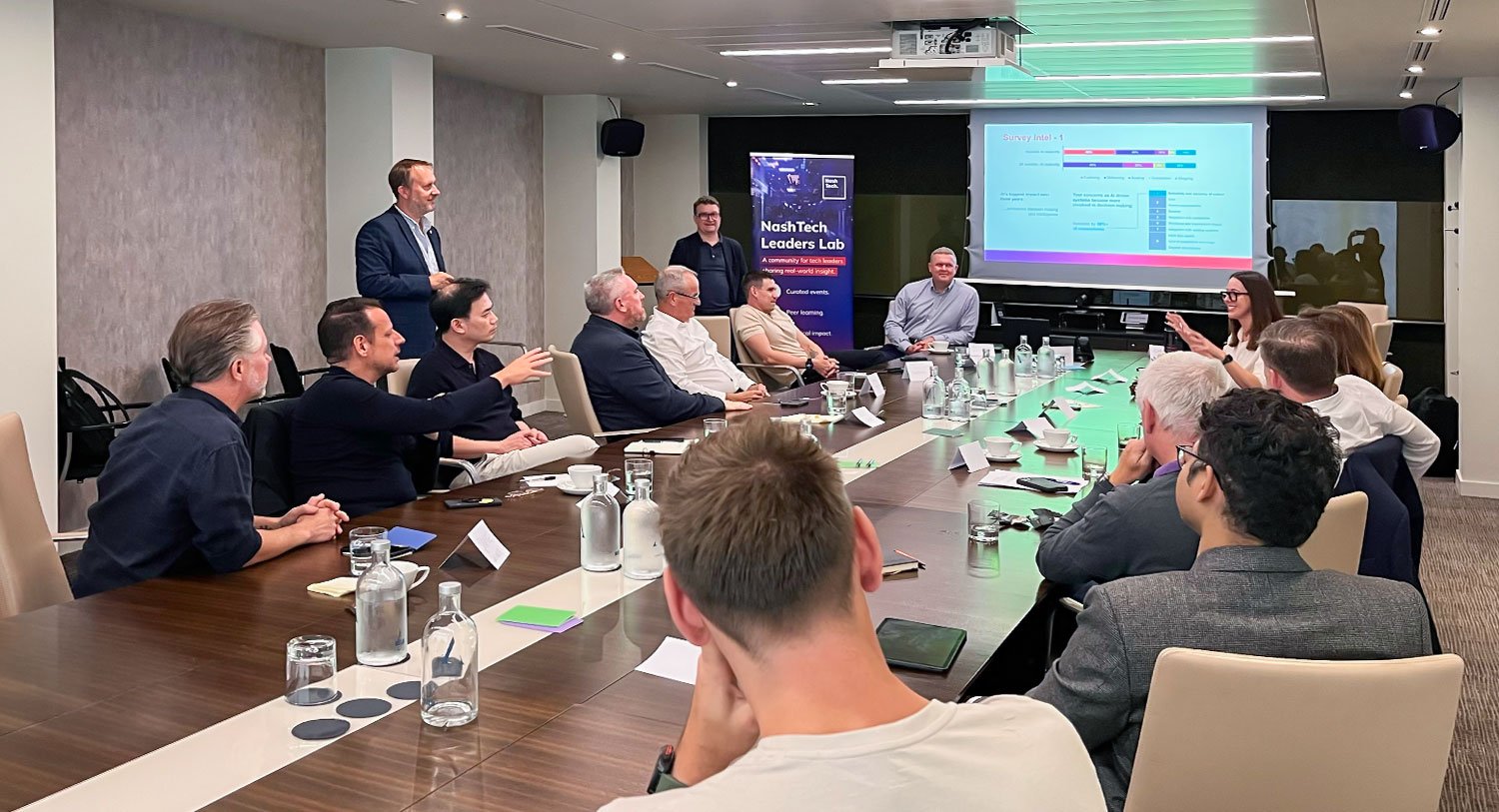
Boards are increasingly expecting results from AI, but technology leaders are still working out which bets to make, where to invest, how to govern them and what readiness looks like when the technology changes every few months. This tension shaped the latest NashTech Leaders Lab roundtable in London, where 20 senior technology leaders from across the UK shared their experiences. This article captures just some of the discussion, which may help other CIOs and CTOs navigate the same decisions. Let’s dive into it.

From AI execution and technology foundations to the changing shape of leadership, Chris Weston and Natalie Whittlesey share three conversations shaping the CIO agenda.
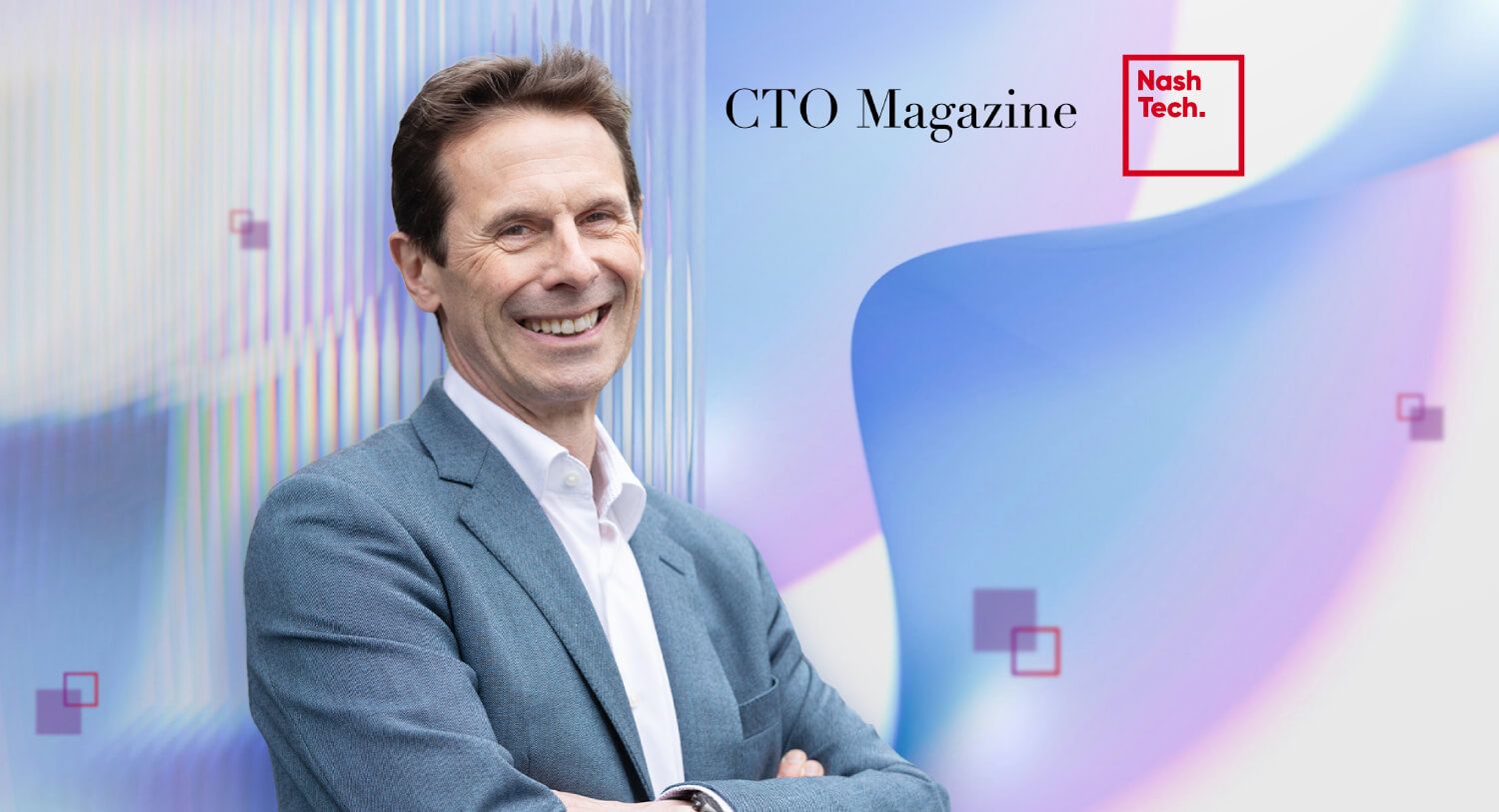
In an interview with CTO Magazine, NashTech CEO John O’Brien explores what becoming AI-native means in practice, and why sustainable transformation requires more than adopting the latest technology.