From AI execution and technology foundations to the changing shape of leadership, Chris Weston and Natalie Whittlesey share three conversations shaping the CIO agenda.
NashTech was proud that two members of its team were on judging panels. Senior Technology Consultant Chris Weston served as a CIO 100 Awards judge, while Senior Client Community Director Natalie Whittlesey joined the Next CIO Awards panel.
The daytime conference featured presentations, panels, specialist tracks and roundtables, followed by an evening celebrating the CIO 100 and Next CIO cohorts.
Across the formal sessions and conversations in between them, three themes kept resurfacing: moving AI from proof of concepts into execution, strengthening the foundations beneath it and developing the people who will lead what comes next.
Here is what Chris and Natalie heard around the room…
1. AI has entered its execution era
AI featured throughout the conference, but the conversation had clearly moved beyond AI ambition.
CIOs were discussing what it takes to put AI into practice: the foundations, ownership and leadership needed to turn investment into measurable value.
They discussed how that value is not limited to financial return. It could mean better customer experiences, more productive employees, stronger compliance or faster and better-informed decision-making.
Underneath these conversations were practical questions about delivery:
- How do organisations move successful AI pilots into production?
- Who owns AI-enabled decisions and their outcomes?
- How can organisations encourage experimentation while maintaining appropriate governance and control?
These questions show how quickly the AI conversation has matured. Yet NashTech’s research found that 85% of organisations have adopted AI or plan to do so, yet many still face unclear returns, aren’t sure what to measure, and have skills gaps and operational readiness issues.
We also heard technology leaders describe the risk of “AI paralysis”: waiting for the perfect route when, actually, taking a sensible first step is good enough.
As one delegate put it:
“It is better to ‘plot any path’ than wait for the ‘perfect route’.”
The message was to choose a worthwhile problem, establish sensible controls and start learning rather than waiting for every unknown to disappear.
|
What this means for CIOs: choose a clearly defined business problem, agree who owns the outcome and establish the guardrails needed to learn safely. Progress creates evidence; endless preparation does not. For leaders deciding what to do next, our AI execution hub offers practical tools for defining outcomes, assessing whether pilots are ready to scale and building a stronger case for investment. |
2. Technology foundations are back in the boardroom
Conversations among delegates reinforced the importance of strong technology foundations.
Data quality, integration, legacy modernisation, governance and security are not new priorities, but AI has made them more urgent. As AI becomes part of core business processes, weaknesses in the underlying technology estate become harder to ignore and more expensive to work around.
This is particularly relevant as “shadow AI” grows and employees use AI tools outside IT’s oversight. Leaders need to create space for experimentation while protecting organisational and customer data.
As one delegate explained:
“The key difference is control. With clear guardrails, organisations can encourage experimentation without allowing unmanaged tools and data practices to create unnecessary risk.”
The familiar build-versus-buy debate is also evolving. One track explored the so-called “SaaSpocalypse”: the possibility that AI will make it easier for organisations to create their own tools rather than buying a separate software product for every need.
But the ability to build something is only one part of the equation. Integrating, operating, securing and maintaining it within a complex organisation is much harder.
As one CIO put it:
“We might be able to build it, but integrating it, running it, maintaining it, making it work in our business, and keeping it governed and controlled — that’s the hardest stuff.”
This closely echoes conversations within NashTech Leaders Lab, where CIOs and technology leaders have described integration as a leadership challenge, not simply a technical task.
Integration shapes how organisations manage risk, modernise services, complete acquisitions and prepare for AI. It requires decisions about ownership, investment and business priorities, rather than simply choosing the right technology.
|
What this means for CIOs: do not assess an AI solution solely on whether it can be built. Consider the data, integration, security, ownership and ongoing operating model needed to make it dependable. Explore more of the Leaders Lab community’s thinking in the Leaders Lab hub. |
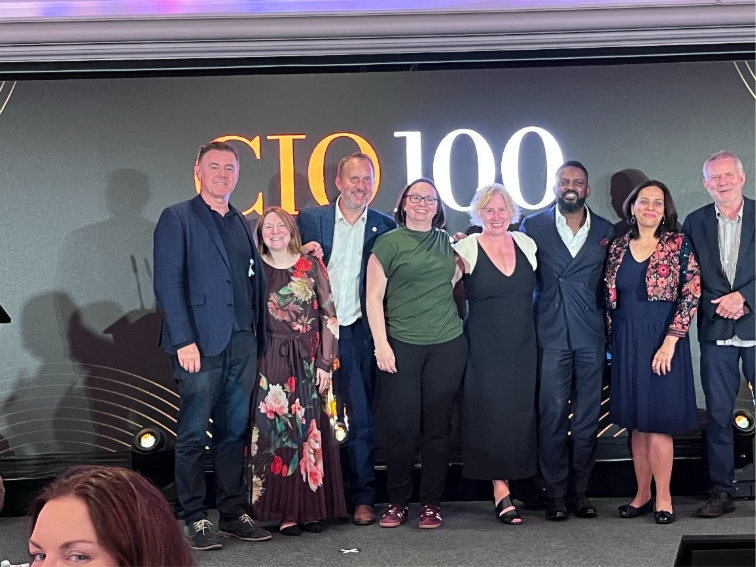 Chris Weston at the CIO 100 Awards and Conference UK 2026
3. Technology leadership is increasingly human
The human impact of AI was also evident in conversations about changing roles.
One speaker described how the developer’s role could evolve:
“I see developers as ‘conductors’ who orchestrate code and AI-generated components, rather than writing every piece of code themselves.”
This change requires more than technical knowledge. Judgement, communication, business understanding and the ability to lead through uncertainty are becoming more important across technology teams.
The awards reflected this wider reality. Categories covering people, culture, inclusion, future talent, partnerships and visionary leadership demonstrated that successful technology leadership extends far beyond technical delivery.
CIOs are expected to keep critical services running, lead transformation, build confidence at board level and bring their organisations with them through change.
This made the recognition of both established and emerging leaders particularly timely. The CIO 100 celebrates leaders already delivering significant impact, while the Next CIO cohort creates visibility, development opportunities and stronger networks for those coming through behind them.
Together, the programmes recognise that strong technology leadership must be celebrated today and developed for tomorrow.
| What this means for CIOs: capability planning and relevant education should address how existing roles will evolve, not simply how many new AI specialists the organisation needs. |
4. Keeping the conversation going
The CIO 100 Awards and Conference UK succeeds because it combines recognition with honest peer learning. The formal sessions bring important ideas to the stage, while the conversations around them help leaders compare experiences, challenge assumptions and realise that many of their hardest problems are shared.
Nat and Chris were proud to play a part in this year’s event and to celebrate the CIO 100 and Next CIO cohorts.
Those conversations do not need to end when the awards finish.
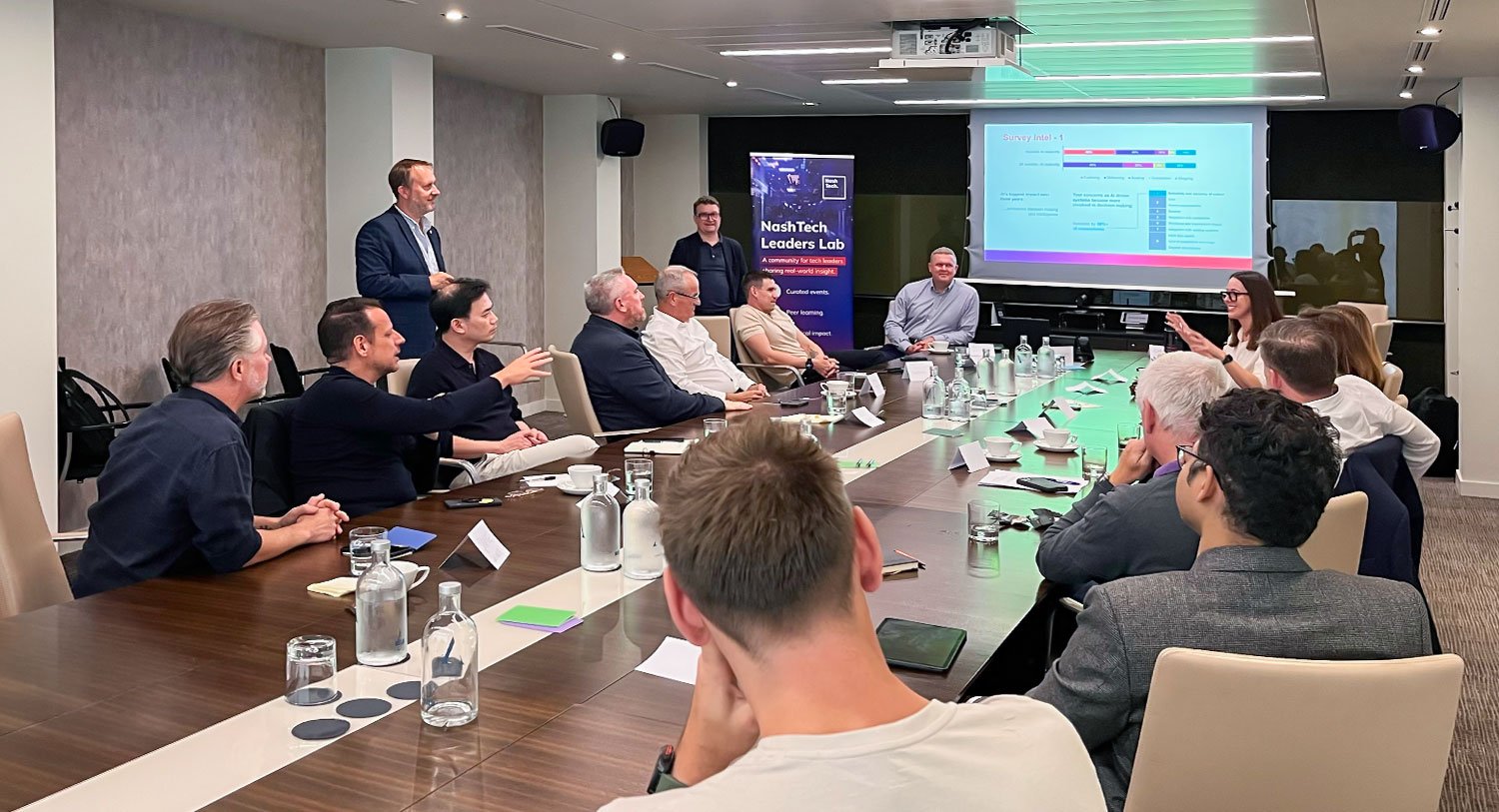
NashTech Leaders Lab brings senior technology leaders together throughout the year to discuss AI, integration, modernisation and the pressure to demonstrate value. It provides a space to compare experiences, test ideas with peers and turn candid conversations into practical guidance.
If you are facing a question that would benefit from honest peer input, join the NashTech Leaders Lab community. Bring the challenge you cannot solve alone and add your experience to the conversation.
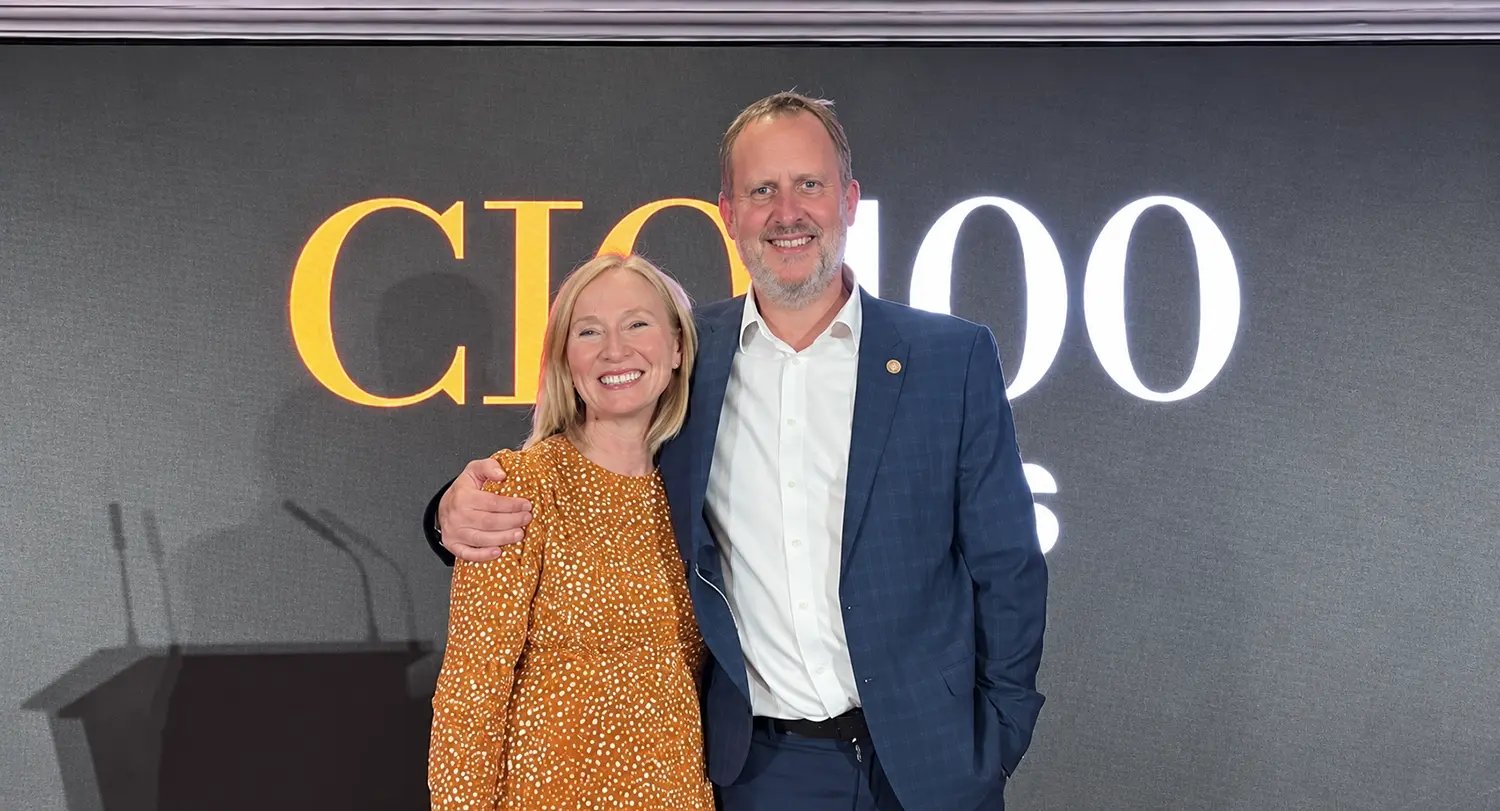
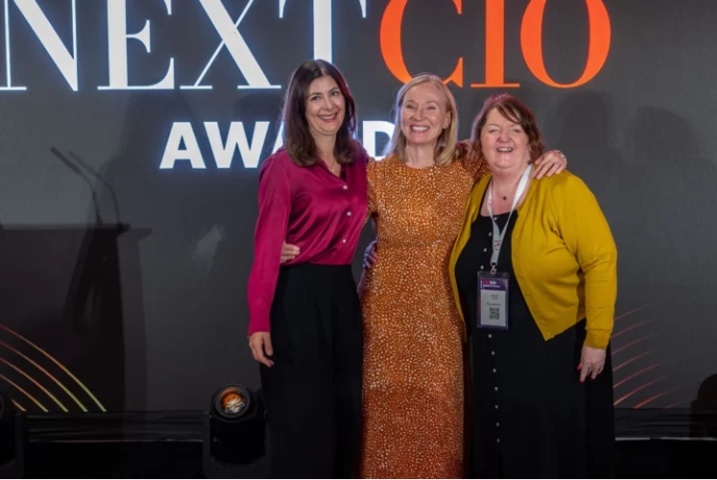 Natalie Whittlesey at the CIO 100 Awards and Conference UK 2026