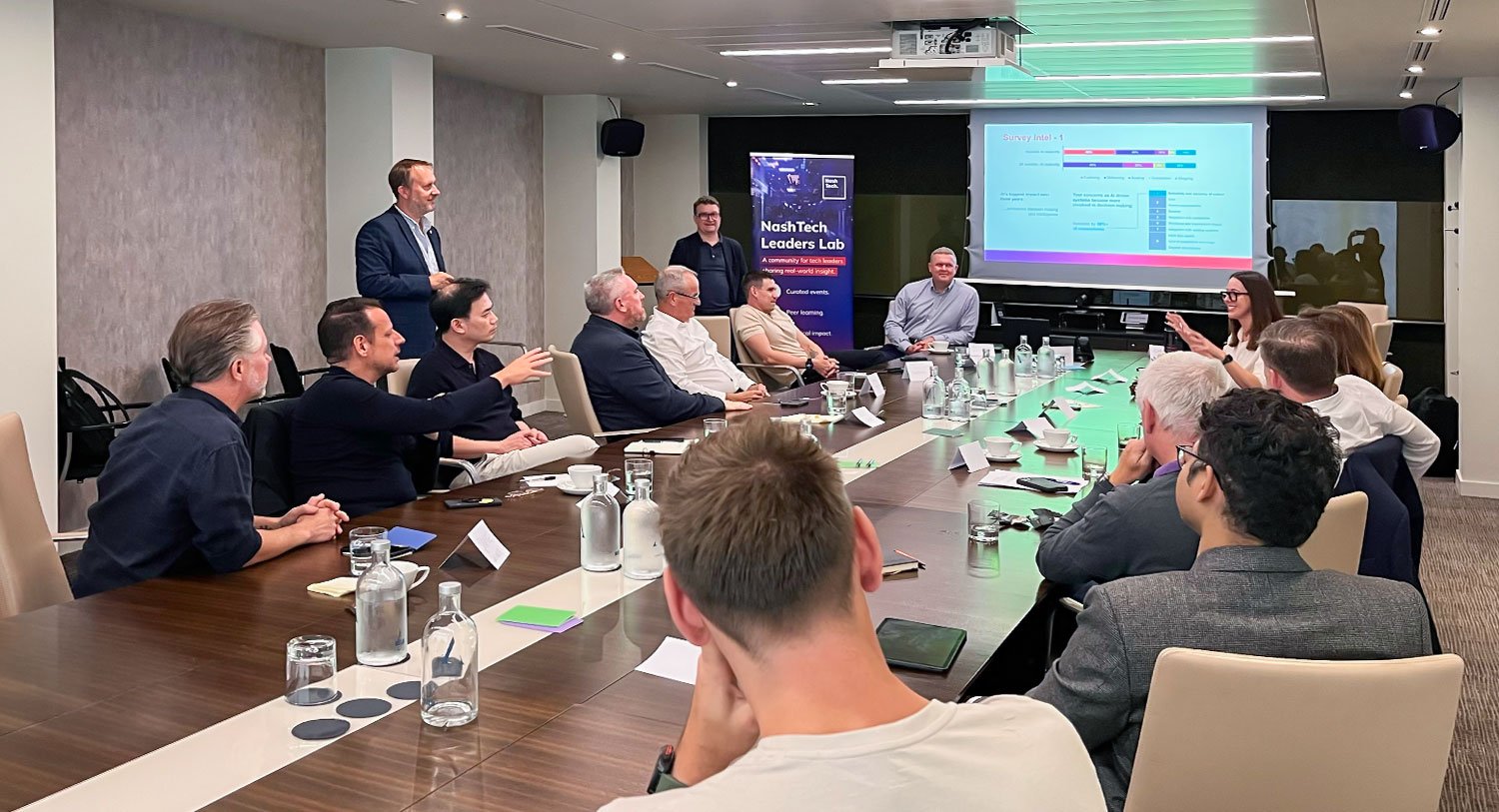
At a thought-provoking breakfast meeting with technology leaders in November 2024, we explored a crucial question about generative AI. The responses revealed something that many outside the technology leadership sphere might find surprising: CIOs and CTOs are primarily focused on business transformation, not just technology implementation.
When asked whether GenAI represents merely a technical implementation or requires a wholesale business model change, the data was compelling. A decisive 73% of technology leaders identified it as demanding significant business model transformation. This shouldn’t surprise those who understand the modern CIO role, yet it often does.
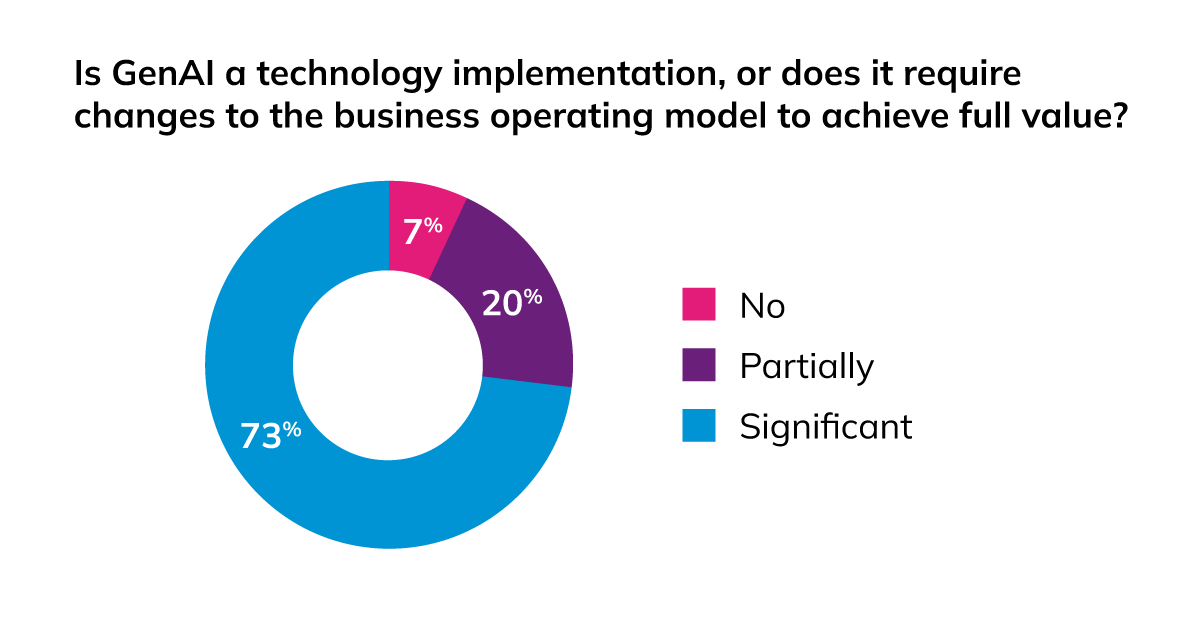
Data taken from NashTech's AI Stick or Twist roundtable
You see, contrary to the outdated view of CIOs as merely “keeping the lights on” technologists, today’s technology leaders are deeply embedded in shaping business strategy. We’re not just asking “how” to implement GenAI, but “why” and “what” it means for our organisations’ future.
The breakfast discussion revealed this strategic mindset in action. Only one participant viewed GenAI through a purely technical lens. The rest recognised it as a catalyst for fundamental business transformation, requiring changes across:
- Core business processes and workflows
- Value proposition and service delivery
- Talent development and workforce planning
- Customer engagement models
- Risk and governance frameworks
- Revenue stream opportunities
This shouldn’t be surprising. After all, CIOs sit at the intersection of technology capabilities and business opportunities. We’re uniquely positioned to understand how technological advances like GenAI can – and should – drive strategic transformation. We’re often the first to spot when a technology shift isn’t just an incremental improvement but a paradigm shift requiring business model evolution.
The unanimity in our discussion was telling – not a single “unsure” response in the room. This certainty doesn’t stem from technical expertise alone, but from a deep understanding of business strategy and transformation. We’re seeing GenAI’s implications not through the narrow lens of technical implementation, but through the wider aperture of business evolution.
This perspective challenges the traditional view of technology leadership. Today’s CIOs aren’t just technology implementers; we’re business strategists who happen to be technology experts. We’re not just asking how to implement GenAI effectively; we’re asking how it fundamentally reshapes our business models.
The message is clear: if your organisation still views GenAI as an IT project, it’s time to recalibrate. Your CIO isn’t just there to implement technology – they’re there to help reshape your business in the context of emerging technologies.
Want to dive deeper into generative AI? Access exclusive roundtable insights here.