
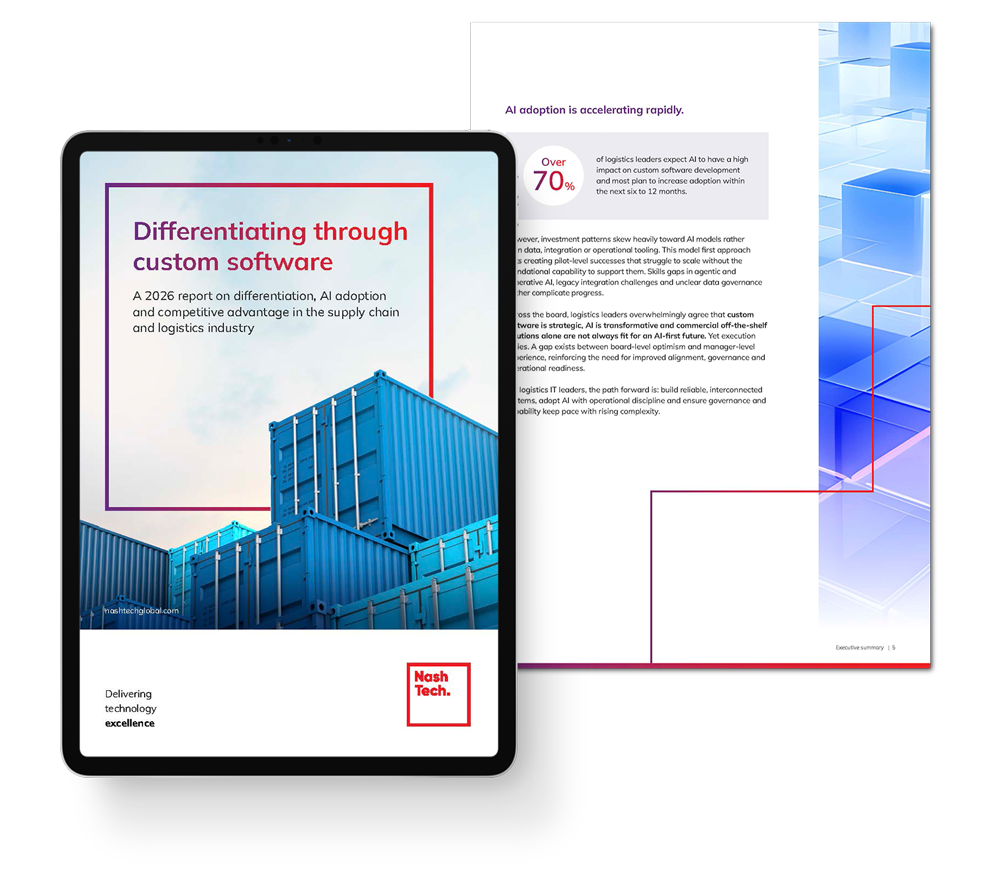
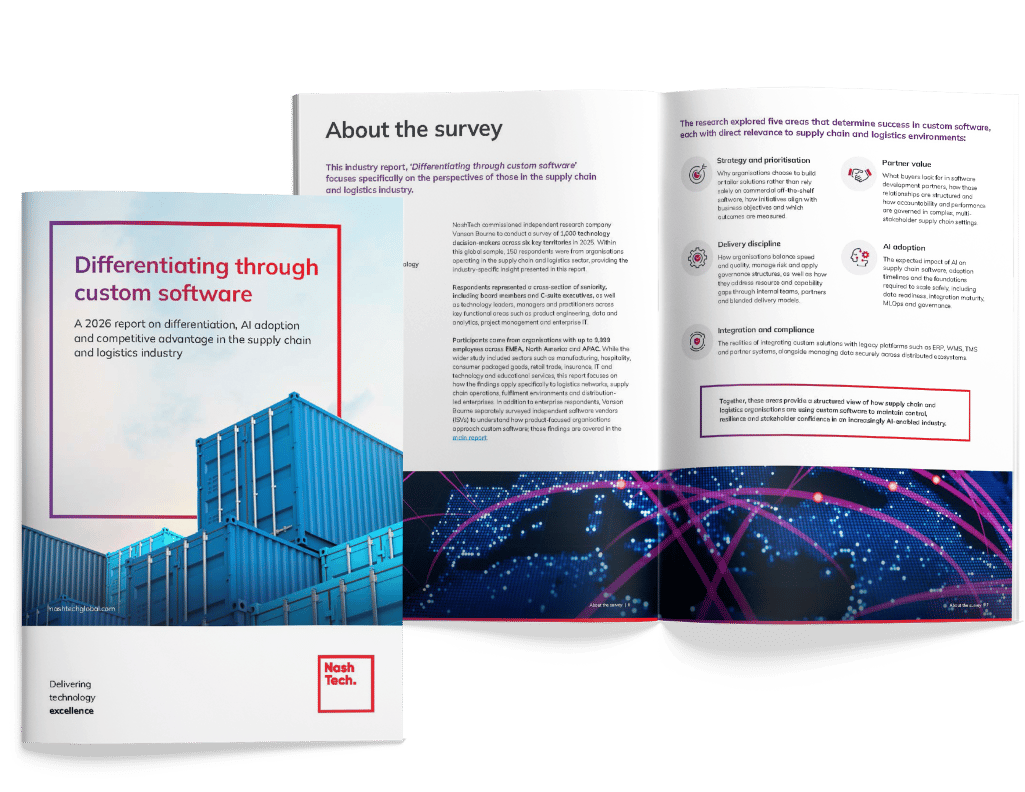



Differentiating with Custom Software
NashTech 2026: Supply chain leaders focus on stability and integration, yet execution and data challenges hold them back.

Report overview
Supply chain and logistics have long powered the global economy behind the scenes. From early ERP systems to today’s AI-enabled platforms, the industry has consistently led the adoption of technology to drive resilience, efficiency, and control.
Today, the pressure is intensifying. Always-on operations, rising complexity, and accelerating eCommerce demands are pushing supply chains to evolve faster than ever. Technology is no longer a support function - it is a strategic advantage.
This report explores how supply chain and logistics leaders are approaching custom software development amid legacy systems, technical debt, integration challenges, and rapid AI adoption.
Today, the pressure is intensifying. Always-on operations, rising complexity, and accelerating eCommerce demands are pushing supply chains to evolve faster than ever. Technology is no longer a support function - it is a strategic advantage.
This report explores how supply chain and logistics leaders are approaching custom software development amid legacy systems, technical debt, integration challenges, and rapid AI adoption.

What’s Inside
By downloading this report, you’ll discover:- Why logistics leaders choose custom software over off-the-shelf tools
- How integration, governance and compliance shape decision-making
- Where legacy systems and skills gaps are slowing progress
- How AI is changing the future of custom software development
- What it takes to scale innovation without disrupting operations
Key findings
Over 70%
Only 36%
98%
of logistics leaders expect AI to significantly impact custom software development
of logistics leaders cite security and compliance as a major concern when considering offshore development
say custom software is central to enterprise strategy, not just an IT concern
This report covers:
- 1000 enterprise IT decision-makers surveyed globally
- Organisations with 500 – 9,999 employees
- Regions covered: EMEA, North America and APAC
- Leadership level: Board members, C-suite executives, senior management and mid-level managers
- Departments: IT, DevOps, data and analytics, engineering and project management
- 150 supply chain and logistics leaders
- Additional insights from independent software vendors (ISVs)