Not seeing results from your AI initiatives? Discover the obstacles that could be standing in the way. Learn morearrow_forward
Not seeing results from your AI initiatives? Discover the obstacles that could be standing in the way. Learn morearrow_forward
Not seeing results from your AI initiatives? Discover the obstacles that could be standing in the way. Learn morearrow_forward
Not seeing results from your AI initiatives? Discover the obstacles that could be standing in the way. Learn morearrow_forward
Logistics
Logistics technology solutions that move as fast as your operations
Legacy systems, rising costs and constant disruption are slowing down an industry centred on speed and efficiency. We help you modernise, automate and scale with technology that delivers measurable impact, fast.
Margins are tight. Customer expectations are rising. And chances are your systems weren’t built either for this pace or to absorb new technological innovations. We help logistics and supply chain organisations turn complexity into competitive advantage with smarter technology.
sms
Fragmented systems slow everything down
Disconnected ERP, WMS and TMS data create delays, errors and costly workarounds
NashTech has exceeded our expectations for speed, accuracy and flexibility. NashTech’s quality control processes are the best that we have seen and contribute to the excellent results that TTI continually receives from NashTech.
The team from NashTech supported us to achieve the tech strategies in a short time scale. You allowed us to get an independent view on the quality of all our services in a quick time frame to be able for us to hit our targets.
Ready to move faster?
Let’s build a smarter supply chain together
Whether you’re modernising legacy systems or scaling operations, we’ll help you define the right roadmap and deliver measurable results.
Not ready yet?
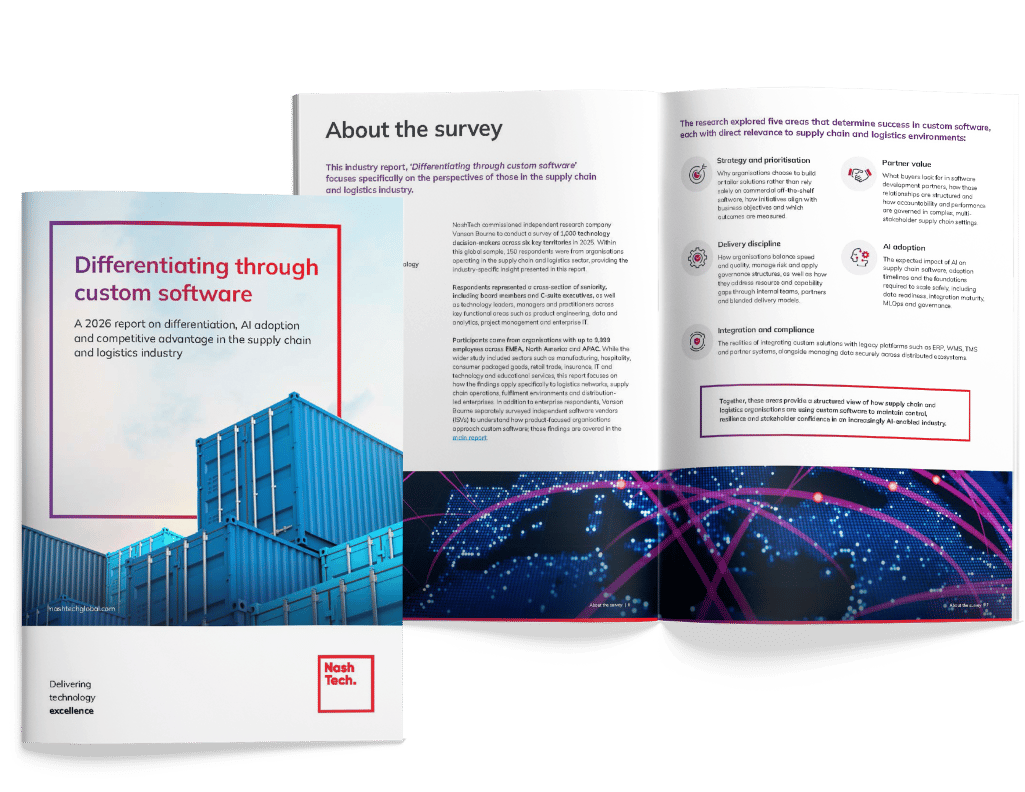
Explore our executive resources designed specifically for the supply chain and logistics industry.
Logistics technology solutions are digital tools and platforms that improve how goods move through the supply chain. They include warehouse management systems, transport planning systems, data platforms, AI-driven automation and cloud-based applications that increase efficiency, visibility and control.
Logistics digital transformation replaces manual processes and legacy systems with connected, automated solutions. This improves speed, reduces errors, enhances real-time visibility and helps organisations respond faster to disruption and demand changes.
Supply chain technology connects systems, data and processes across your operations. It enables better forecasting, smarter planning and end-to-end visibility, helping you reduce costs, manage risk and improve customer experience.
Warehouse management technology includes software and automation tools that optimise inventory tracking, picking, packing and fulfilment. Modern solutions use AI, robotics and real-time data to improve accuracy, reduce delays and increase throughput.
AI and automation can streamline processes such as route optimisation, demand forecasting, customs documentation and warehouse operations. This reduces manual effort, improves accuracy and enables faster, data-driven decision making.
Modernising legacy systems involves migrating to cloud platforms, integrating fragmented systems and rebuilding applications for scalability. This reduces technical debt, improves performance and creates a foundation for innovation and growth.
Real-time visibility allows you to track inventory, shipments and operations as they happen. This improves forecasting accuracy, reduces delays, helps manage disruptions, increases customer satisfaction and enables more informed decision making across the business.
By automating manual workflows, optimising routes and improving inventory management, logistics technology solutions reduce operational inefficiencies. This leads to lower labour costs, fewer errors and better resource utilisation.
Data is central to supply chain optimisation. It enables predictive analytics, demand sensing and performance tracking, helping organisations make proactive decisions, reduce risk and continuously improve operations.
Manufacturing software development connects production systems with supply chain operations. This improves coordination between manufacturing, inventory and distribution, ensuring smoother workflows and faster time to market.
Logistics technology solutions are digital tools and platforms that improve how goods move through the supply chain. They include warehouse management systems, transport planning systems, data platforms, AI-driven automation and cloud-based applications that increase efficiency, visibility and control.
Logistics digital transformation replaces manual processes and legacy systems with connected, automated solutions. This improves speed, reduces errors, enhances real-time visibility and helps organisations respond faster to disruption and demand changes.
Supply chain technology connects systems, data and processes across your operations. It enables better forecasting, smarter planning and end-to-end visibility, helping you reduce costs, manage risk and improve customer experience.
Warehouse management technology includes software and automation tools that optimise inventory tracking, picking, packing and fulfilment. Modern solutions use AI, robotics and real-time data to improve accuracy, reduce delays and increase throughput.
AI and automation can streamline processes such as route optimisation, demand forecasting, customs documentation and warehouse operations. This reduces manual effort, improves accuracy and enables faster, data-driven decision making.
Modernising legacy systems involves migrating to cloud platforms, integrating fragmented systems and rebuilding applications for scalability. This reduces technical debt, improves performance and creates a foundation for innovation and growth.
Real-time visibility allows you to track inventory, shipments and operations as they happen. This improves forecasting accuracy, reduces delays, helps manage disruptions, increases customer satisfaction and enables more informed decision making across the business.
By automating manual workflows, optimising routes and improving inventory management, logistics technology solutions reduce operational inefficiencies. This leads to lower labour costs, fewer errors and better resource utilisation.
Data is central to supply chain optimisation. It enables predictive analytics, demand sensing and performance tracking, helping organisations make proactive decisions, reduce risk and continuously improve operations.
Manufacturing software development connects production systems with supply chain operations. This improves coordination between manufacturing, inventory and distribution, ensuring smoother workflows and faster time to market.
Logistics technology solutions are digital tools and platforms that improve how goods move through the supply chain. They include warehouse management systems, transport planning systems, data platforms, AI-driven automation and cloud-based applications that increase efficiency, visibility and control.
Logistics digital transformation replaces manual processes and legacy systems with connected, automated solutions. This improves speed, reduces errors, enhances real-time visibility and helps organisations respond faster to disruption and demand changes.
Supply chain technology connects systems, data and processes across your operations. It enables better forecasting, smarter planning and end-to-end visibility, helping you reduce costs, manage risk and improve customer experience.
Warehouse management technology includes software and automation tools that optimise inventory tracking, picking, packing and fulfilment. Modern solutions use AI, robotics and real-time data to improve accuracy, reduce delays and increase throughput.
AI and automation can streamline processes such as route optimisation, demand forecasting, customs documentation and warehouse operations. This reduces manual effort, improves accuracy and enables faster, data-driven decision making.
Modernising legacy systems involves migrating to cloud platforms, integrating fragmented systems and rebuilding applications for scalability. This reduces technical debt, improves performance and creates a foundation for innovation and growth.
Real-time visibility allows you to track inventory, shipments and operations as they happen. This improves forecasting accuracy, reduces delays, helps manage disruptions, increases customer satisfaction and enables more informed decision making across the business.
By automating manual workflows, optimising routes and improving inventory management, logistics technology solutions reduce operational inefficiencies. This leads to lower labour costs, fewer errors and better resource utilisation.
Data is central to supply chain optimisation. It enables predictive analytics, demand sensing and performance tracking, helping organisations make proactive decisions, reduce risk and continuously improve operations.
Manufacturing software development connects production systems with supply chain operations. This improves coordination between manufacturing, inventory and distribution, ensuring smoother workflows and faster time to market.
Expert insight
Rethinking AI in the supply chain
Discover how leading organisations use AI and predictive analytics to improve visibility, reduce risk and respond faster to disruption.
WHY NASHTECH
Proven results at scale
We combine global scale with deep technical expertise to deliver consistent results.
68
Client net promoter score
75%+
Average test coverage
26+ years
Engineering excellence
99%
Defect removal efficiency
A technology partner that delivers
We combine deep logistics domain expertise with proven delivery frameworks to help you move faster with confidence. From data platforms to AI-driven automation, we focus on outcomes, not just outputs. Our teams work as an extension of yours to reduce risk, accelerate value and deliver long-term impact.
Global delivery
Global expertise, local collaboration
Headquartered in the UK, NashTech combines local advisory expertise with global engineering teams. Our delivery model combines onshore leadership with offshore scale across Europe, Asia and the Americas. We bring the scale, flexibility and expertise needed to support your ambitions, wherever you are in your journey. Giving you access to top engineering talent, cost efficiency and round-the-clock delivery, without compromising quality or collaboration.
Our experience in multiple industries lets us apply insights from one sector to another; whether it be an insurance provider learning from a retailer, or an education institution drawing ideas from hospitality. Just some of the industries we work with include: